Charting Geolocation Filters That Customize Game Libraries for Cross-Regional Compliance Standards
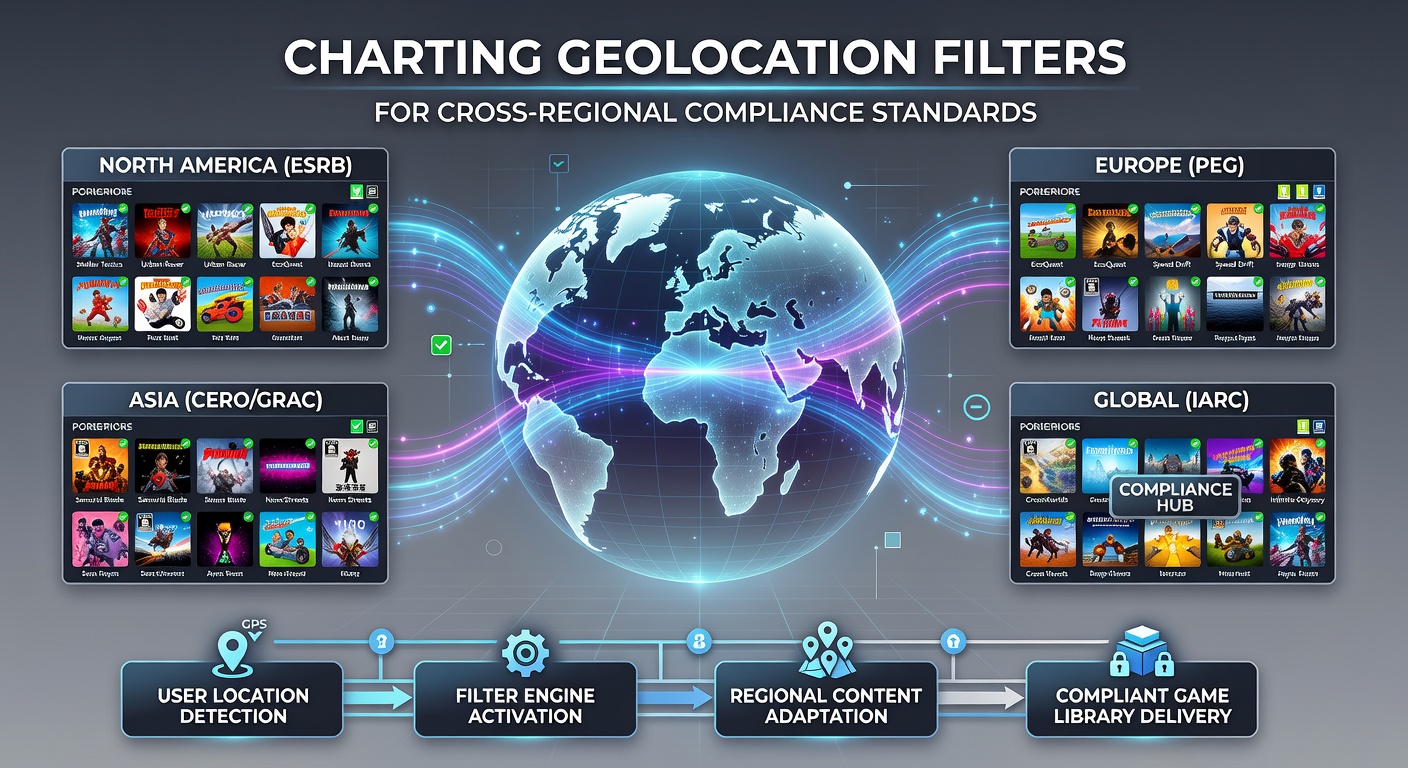
Geolocation filters operate as the backbone of modern gaming compliance systems, allowing operators to adjust available game libraries based on a user's detected location while maintaining adherence to varying international and subnational regulations. These tools combine IP address verification with GPS data and device signals to determine jurisdiction, then dynamically restrict or enable titles according to local rules on game mechanics, payout structures, and player eligibility. Observers note that this process has grown more sophisticated since the early 2010s as operators expanded across borders.
Multiple jurisdictions maintain distinct requirements that force these customizations. European Union member states apply the GDPR alongside gambling directives that differ by country, whereas Australian states enforce separate rules on electronic gaming through bodies like the Australian Communications and Media Authority. In North America, provincial authorities in Canada and state regulators in the United States each set their own standards, creating a patchwork that platforms must navigate in real time. Data from industry reports indicate that mismatches between detected location and enabled content can trigger immediate license reviews or fines.
How Geolocation Systems Determine Access
Modern implementations rely on layered verification rather than single-point checks. Initial IP mapping provides a broad region, after which supplementary signals such as Wi-Fi network data or cellular triangulation refine the position to within a few hundred meters. When users cross administrative boundaries, the system reevaluates access and may swap entire game catalogs within seconds. Researchers at technical universities have documented that these transitions occur without interrupting active sessions in many tested environments.
Game libraries themselves are tagged with compliance metadata during upload. Each title carries flags for permitted jurisdictions, volatility limits, and feature restrictions. Once the filter identifies the user's region, it serves only the subset matching those flags. This tagging system allows operators to maintain one master catalog while presenting region-specific storefronts, reducing storage overhead and simplifying updates when laws change.
Cross-Regional Adjustments in Practice
Platforms operating in multiple markets apply these filters daily. A player in one Australian state might see fewer progressive jackpot slots than someone in another because of differing maximum bet rules, while the same user traveling to a neighboring province could gain access to additional table game variants. Similar shifts appear when users move between Canadian provinces, where Ontario's framework permits certain live dealer formats unavailable elsewhere. Evidence from operator disclosures shows that such automatic adjustments help avoid regulatory conflicts without requiring separate platform versions for each area.
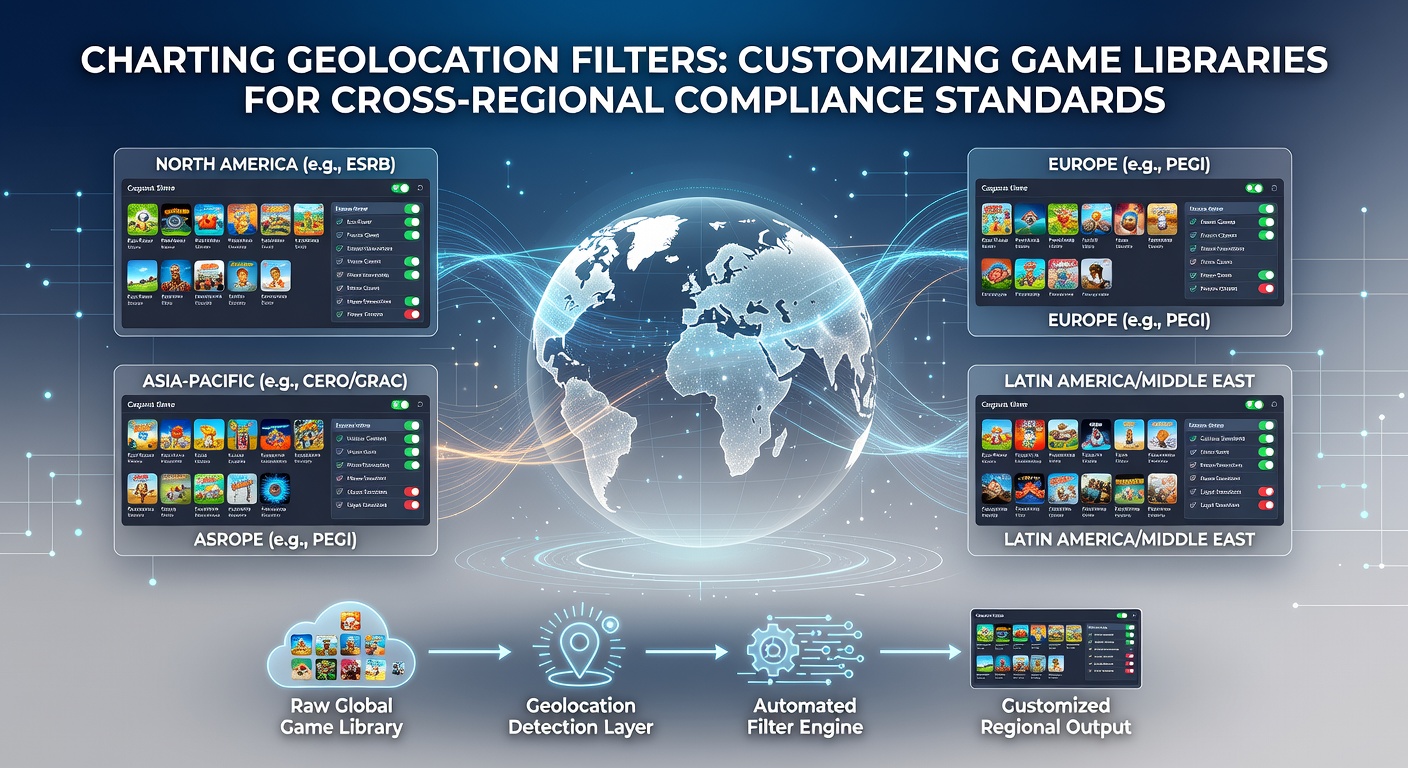
Developers integrate these filters at the content delivery layer rather than the game engine itself. This separation means new titles can receive compliance tags before release, and existing games can gain or lose availability through metadata updates alone. In May 2026 several new sweepstakes-style platforms entered additional U.S. markets, relying on these same mechanisms to present only state-approved game sets from day one.
Technical Standards and Industry Tools
Industry groups such as the European Gaming and Betting Association have published guidelines on location accuracy thresholds that operators often adopt as minimum benchmarks. These recommendations specify how frequently systems must recheck position during extended sessions and what fallback actions apply when signals weaken. Independent testing firms then audit the implementations against those benchmarks before platforms receive certification for new regions.
Academic studies on location-based services highlight ongoing refinements in signal fusion techniques that combine satellite, terrestrial, and network data. One paper from a Canadian research institution examined error rates across urban and rural environments, finding that hybrid approaches reduced false region assignments by measurable margins. Operators apply these findings when selecting vendors for geolocation modules, prioritizing solutions that maintain accuracy across diverse terrains and network conditions.
Regulatory Updates and Future Developments
Regulators continue to refine location requirements as technology advances. Recent directives from bodies in multiple regions emphasize audit trails that log every access decision, enabling quicker investigations when disputes arise. These records must detail the precise signals used and the resulting library customization applied at each moment of play.
Looking ahead, integration with emerging digital identity frameworks may allow filters to incorporate verified residency data alongside traditional signals. Such changes would further tighten compliance while potentially streamlining user onboarding. Industry conferences scheduled for late 2026 are expected to feature demonstrations of these evolving systems.
Conclusion
Geolocation filters continue to serve as essential infrastructure for operators managing cross-regional game libraries. By mapping user positions against jurisdiction-specific rules and serving only compliant content, these systems support legal operation across fragmented regulatory landscapes. Ongoing technical improvements and alignment with updated standards ensure the approach remains viable as markets expand and rules evolve.