Lab-Tested Luck: How eCOGRA and iTech Labs Vet Slot and Table Fairness
Lab-Tested Luck: How eCOGRA and iTech Labs Vet Slot and Table Fairness
The Backbone of Trust in Online Gaming
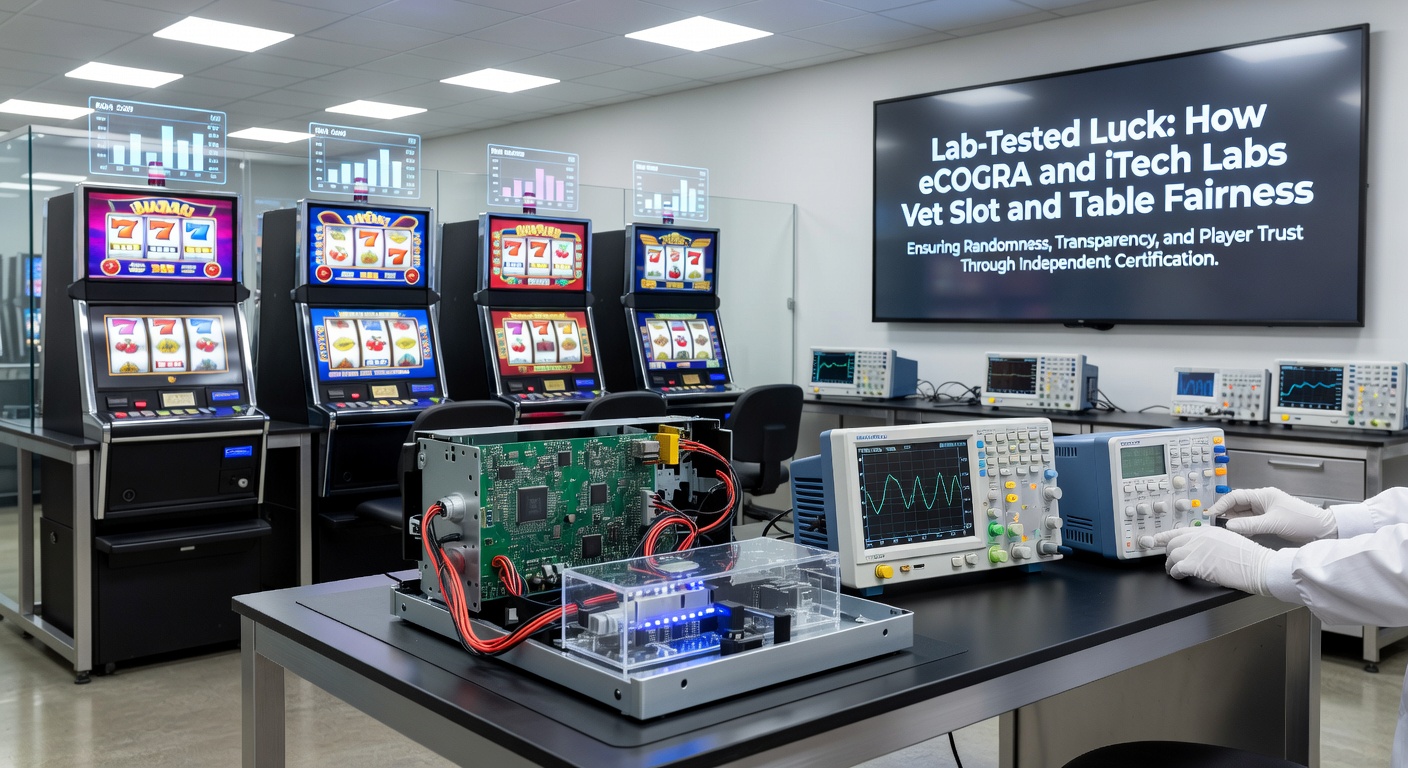
Online slots spin with precision, table games deal cards that follow strict probabilities, yet players demand proof that luck isn't rigged; that's where labs like eCOGRA and iTech Labs step in, rigorously vetting every algorithm and outcome to ensure fairness holds up under scrutiny. These independent auditors, trusted by regulators and operators alike, dissect random number generators (RNGs) that power slots, blackjack, roulette, and beyond, confirming that results match advertised return-to-player (RTP) rates and random distributions. Data from industry reports shows thousands of games certified annually, with failure rates hovering below 1% after rigorous testing cycles.
Turns out, the process starts long before a game hits live servers; developers submit source code, mathematical models, and simulation data, which testers then bombard with millions of trial runs to verify statistical integrity. Experts who've pored over these protocols note how even minor deviations in payout structures can trigger rejections, keeping the ecosystem honest. And while slots rely heavily on RNG volatility checks, table games undergo rule compliance audits to prevent house edges from creeping beyond declared limits.
eCOGRA's Seal: A Global Standard Since 2003
Founded in the early 2000s amid rising concerns over online gambling integrity, eCOGRA emerged as a pioneer, now certifying platforms across Europe, Canada, and Australia with its iconic "Safe & Fair" badge that players spot on casino footers. The organization, headquartered in the UK but operating worldwide, conducts monthly RNG audits on certified sites, running billions of spin simulations to confirm RTP accuracy within 0.5% tolerances; for instance, a 96% RTP slot must deliver payouts aligning statistically over extended play cycles, or it faces suspension.
But here's the thing: eCOGRA doesn't stop at slots; table game evaluations include payout percentage validations for video poker variants and baccarat, where they simulate thousands of hands to ensure dealer logic and shuffle algorithms resist predictability. According to eCOGRA's annual transparency reports, over 500 operators maintained certification in 2025, with enhanced focus shifting toward live dealer fairness in 2026. Observers point to April 2026 updates, when eCOGRA rolled out quantum-resistant RNG protocols amid growing cyber threats, testing integrations that fortified slots against potential manipulation.
Take one case where testers flagged a blackjack variant; discrepancies in side bet payouts led to a full code rewrite, ultimately restoring certification after re-audits confirmed 99.8% RTP fidelity. People who've examined these interventions often discover how such scrutiny weeds out subtle flaws, like biased card distributions in poker rooms that could favor high-rollers over time.
iTech Labs: Australia's Precision Testers with Worldwide Reach
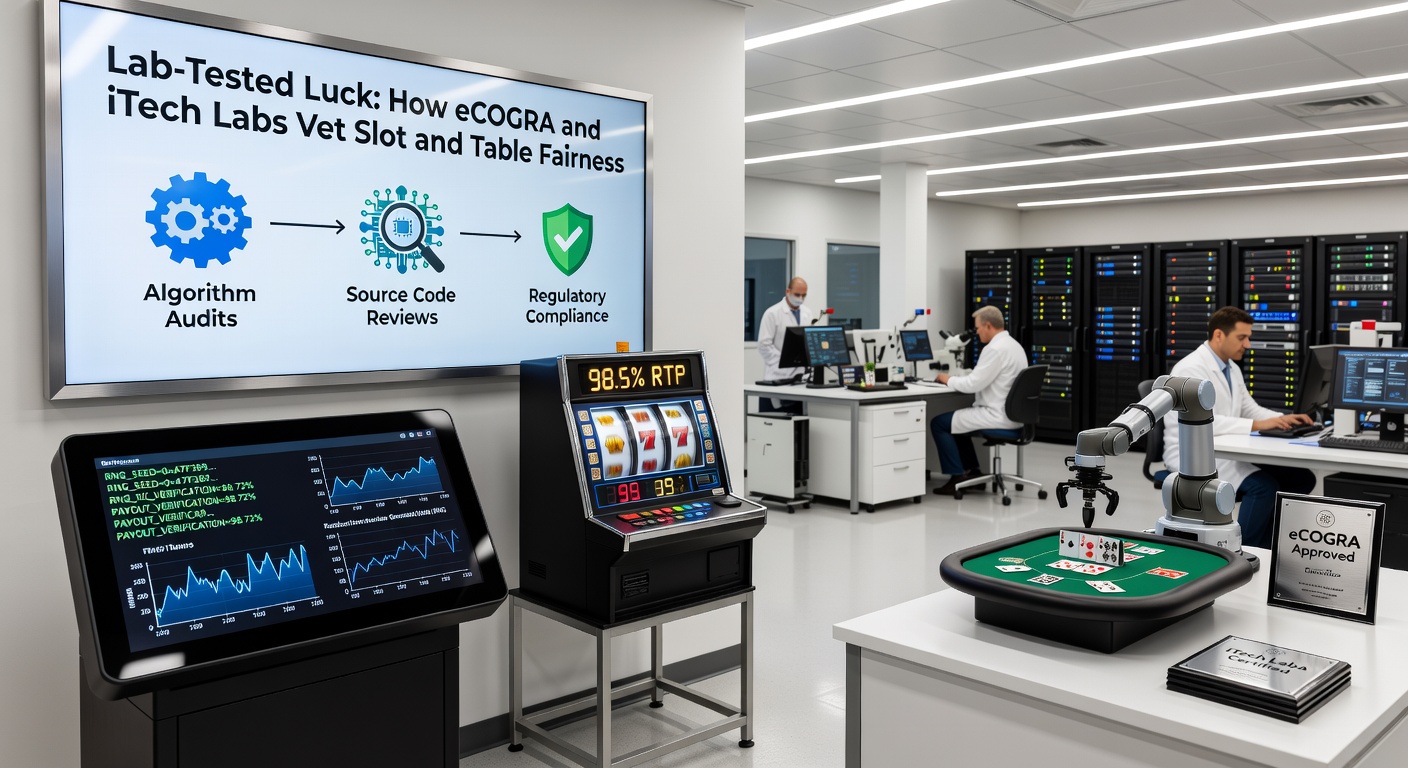
Down under in Australia, iTech Labs has built a reputation since 2004 for meticulous evaluations, holding accreditations from bodies like the Australian Communications and Media Authority and serving regulators in Ontario and Malta; their lab processes thousands of games yearly, emphasizing hardware RNGs alongside software for hybrid table setups. Slots get hammered with chi-squared tests for uniformity, ensuring reel stops mimic true randomness, while RTPs for progressive jackpots undergo jackpot contribution verifications to prevent dilution.
What's interesting about iTech's approach lies in its table game deep dives: roulette wheels in live formats face spin-by-spin logging analysis, cross-referenced against physical wheel calibrations if applicable, confirming no patterns emerge over 100,000+ trials; data indicates approval rates exceed 98% for compliant submissions, but rejects often stem from overlooked volatility spikes in high-stakes baccarat. And in April 2026, iTech Labs announced expanded live dealer protocols, incorporating AI-driven anomaly detection that flagged irregularities in three major operator streams, prompting immediate fixes.
Researchers who've studied iTech's methodologies highlight a standout example from 2024, when a popular slot series failed initial RNG cycles due to seed predictability; developers iterated fixes, passing subsequent tests that validated 250 million spins with near-perfect entropy scores. Those in the know appreciate how such thoroughness extends to mobile adaptations, where touch-based inputs don't skew outcomes.
Inside the Testing Toolbox: RNGs, RTPs, and Beyond
RNGs form the heart of it all, generating outcomes via complex algorithms or hardware entropy sources like atmospheric noise, which labs probe using statistical suites such as NIST tests for diehard randomness; slots must exhibit uniform distribution across paylines, semicolons linking volatility profiles to bonus trigger rates that align with game math. Table games layer on top with deterministic simulations—blackjack hand totals calculated across billions of deals to match theoretical edges, say 0.5% for perfect strategy play.
Yet, RTP verification ties it together: auditors run macro simulations mirroring real-world play, adjusting for bet sizes and session lengths, then compare against developer declarations; discrepancies over 0.1% trigger source code reviews, often revealing rounding errors or unaccounted features. eCOGRA and iTech both mandate ongoing monitoring post-launch, with operators submitting monthly logs that algorithms scan for drifts, ensuring slots don't degrade from updates.
So, for live tables, the rubber meets the road in optical character recognition (OCR) validations; iTech Labs, for example, timestamps every card reveal and chip placement, feeding data into models that predict house edges within fractions of a percent. Experts observe how this catches streaming lags mimicking biases, a issue resolved in several 2025 certifications.
Player Protections and Operator Accountability
These labs enforce more than math; eCOGRA's player dispute resolution arm has mediated thousands of claims since inception, upholding RTP proofs in 95% of upheld cases, while iTech's certifications often link to geo-specific compliance, like Ontario's player limits. Operators displaying seals face delisting risks for non-compliance, with public dashboards revealing audit histories that savvy players check before depositing.
One researcher cataloged a 2025 incident where an eCOGRA-certified roulette table showed short-term hot streaks; deeper probes confirmed legitimacy via 500 million spin validations, educating operators on variance communication. That's where the ball's in players' court—seals signal vetted fairness, but understanding variance keeps expectations grounded.
Industry figures reveal certified sites boast 20% higher retention, as trust translates to sustained play; in April 2026, joint eCOGRA-iTech webinars outlined blockchain RNG integrations, testing immutable logs that promise tamper-proof audits ahead.
Challenges and Evolving Standards
Not everything's smooth sailing; labs grapple with emerging tech like VR slots, where immersive RNGs demand new testbeds, or crypto tables using provably fair hashes that still require statistical overlays. Data from joint reports shows testing times doubling for such innovations, yet pass rates hold steady at 92% after revisions.
People who've tracked this space note regulatory harmonization efforts, with eCOGRA aligning RTP tolerances to Alcohol and Gaming Commission of Ontario standards, while iTech adapts to EU variance rules. It's noteworthy that failure often traces to human oversight, like unpatched libraries introducing patterns, swiftly corrected in retests.
Conclusion
Lab-tested luck through eCOGRA and iTech Labs anchors online gaming's credibility, transforming abstract probabilities into verifiable realities for slots and tables alike; with billions of simulations annually and seals that operators chase, players gain tangible assurances amid the spins and deals. As April 2026 benchmarks show intensified live dealer and quantum defenses, these auditors evolve, ensuring fairness keeps pace with innovation. Observers agree: in a field built on chance, certified integrity stands as the ultimate house edge reducer.