Mapping the Evolution of Reward Structures in Portable Gaming Applications Through Data-Driven Personalization Techniques
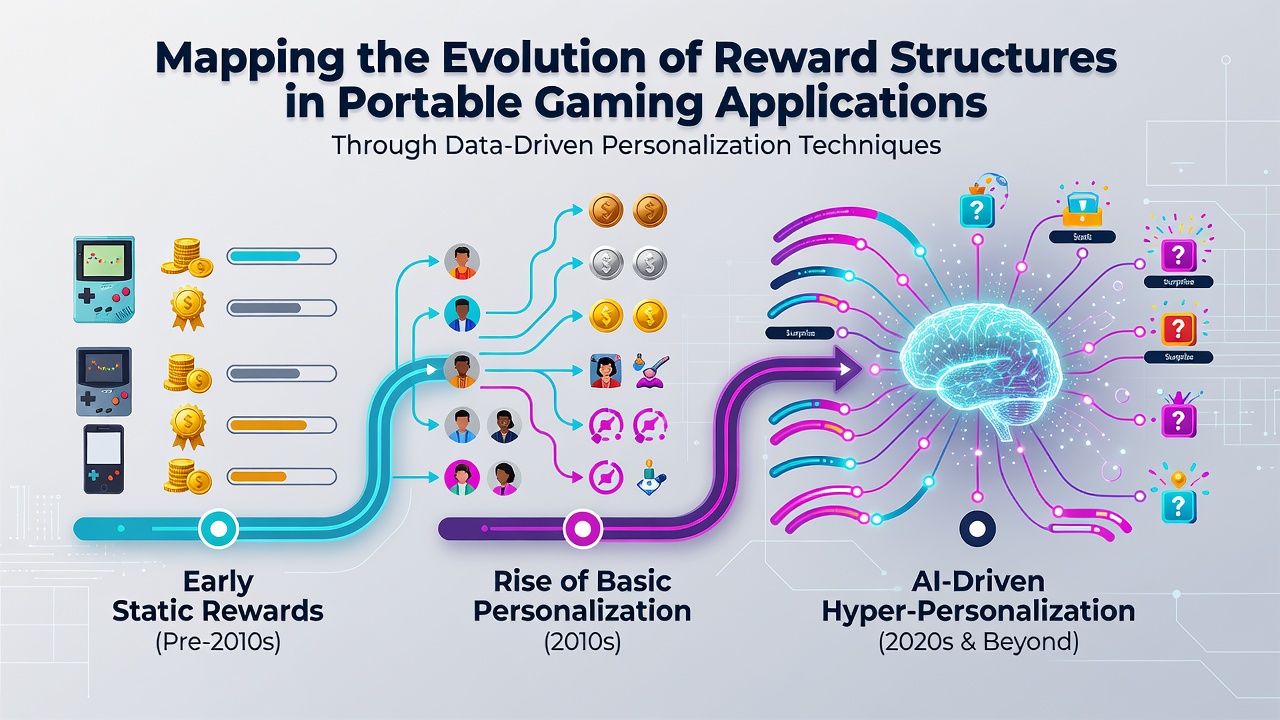
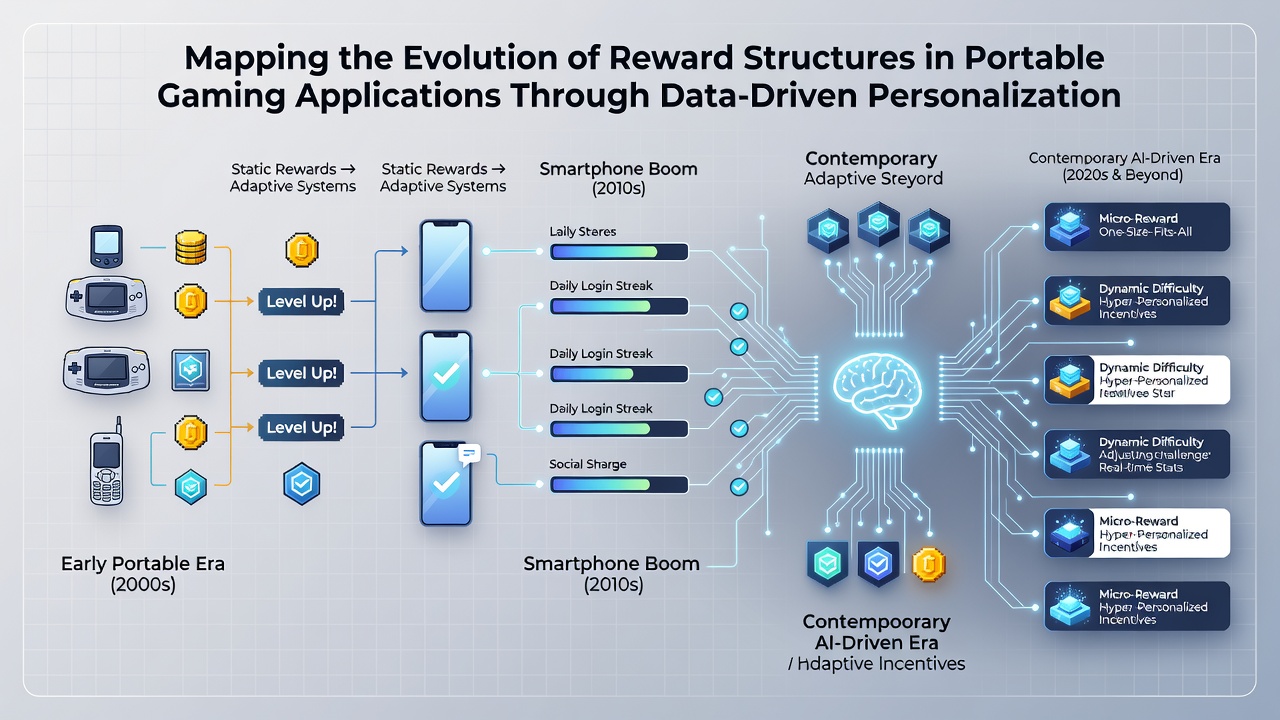
Portable gaming applications have shifted reward structures from fixed point systems to layered frameworks that respond to individual behavior patterns collected through device sensors and session logs. Early mobile titles relied on uniform daily login bonuses and level-up multipliers that applied equally across all users, yet developers soon recognized variations in play frequency and spending habits required more granular adjustments.
Foundations of Static Reward Models
Initial implementations in the late 2000s distributed identical virtual currency packs and cosmetic items without regard to geographic location or device type, while telemetry from basic analytics platforms revealed clusters of high-frequency players who exhausted content faster than average users. Companies responded by introducing tiered loyalty ladders that unlocked additional daily quests once cumulative playtime thresholds were met, and these changes coincided with the rollout of app-store payment integrations that tracked transaction velocity.
Observers note that regulatory filings from bodies such as the Nevada Gaming Control Board documented early experiments with segmented bonus tables in licensed mobile titles, where operators adjusted payout schedules based on aggregated regional data rather than individual profiles. The approach remained coarse because storage constraints on older handsets limited the volume of user-specific variables retained between sessions.
Integration of Behavioral Data Streams
Advancements in on-device processing allowed applications to capture sequences of taps, swipe velocity, and session duration without constant server calls, and these metrics fed into clustering algorithms that grouped users according to risk tolerance indicators such as average bet size relative to account balance. Developers then mapped reward triggers to these clusters, so that players demonstrating longer average session lengths received escalating multiplier offers while shorter-session users encountered time-limited challenges designed to extend engagement windows.
Research from academic groups at institutions including the University of Sydney has tracked how machine-learning models trained on anonymized telemetry improved the precision of reward timing, with one longitudinal dataset covering 2018 through 2023 indicating a measurable uptick in repeat logins when offers aligned with predicted churn windows. Portable titles began storing lightweight preference vectors locally, syncing only summary statistics during low-bandwidth periods to preserve battery life.
By mid-2026, several platforms incorporated contextual signals from ambient light sensors and accelerometer readings to infer whether gameplay occurred during commutes or stationary periods, then adjusted reward density accordingly. Figures released by the Australian Communications and Media Authority in July 2026 highlighted a 14 percent rise in personalized reward redemptions across monitored apps compared with the same period the previous year, underscoring the operational scale of these systems.
Refinement Through Predictive Modeling
Modern implementations employ ensemble models that weigh historical spend velocity against recent interaction velocity, producing dynamic reward schedules refreshed at the start of each session. One documented case involved a puzzle title that varied gem-pack pricing and bonus round frequency according to a player's historical conversion rate, resulting in sustained revenue per active user while maintaining perceived fairness across segments.
Industry reports compiled by the Canadian Gaming Association describe how cross-device synchronization protocols now carry encrypted preference profiles, enabling seamless reward continuity when users switch between tablets and phones. These protocols rely on differential privacy techniques that add calibrated noise to individual records before aggregation, satisfying data-protection statutes in multiple jurisdictions.
Regulatory and Technical Constraints
Compliance requirements have shaped the permissible granularity of personalization, with jurisdictions mandating transparent disclosure of data categories used for reward calculations. Developers responded by surfacing simplified dashboards that list the primary variables influencing offer generation, thereby reducing user inquiries while preserving competitive differentiation among applications.
Hardware limitations on certain legacy devices still necessitate fallback reward tables that revert to population-level averages when local storage or processing capacity proves insufficient, and telemetry logs indicate these fallback events occur at predictable rates tied to operating-system age.
Future Trajectories in July 2026
Current development pipelines test federated learning frameworks that train personalization models across distributed devices without centralizing raw behavioral logs, and preliminary benchmarks presented at industry forums suggest convergence times remain acceptable for daily reward cycles. Observers note continued experimentation with augmented-reality overlays that deliver location-triggered rewards inside physical venues, expanding the definition of portable gaming beyond handset screens alone.
Conclusion
The trajectory of reward structures in portable gaming applications demonstrates a consistent movement toward finer segmentation driven by accumulating behavioral datasets and responsive algorithms. Regulatory filings and academic datasets continue to supply benchmarks that quantify the performance of these techniques across regions, while technical constraints and privacy statutes define the boundaries within which further refinement occurs. As synchronization standards and on-device inference capabilities advance, the mapping of reward evolution remains an active domain of iterative development.