Mapping User Journey Variations in Reward Redemption Processes Across Different Gaming Formats
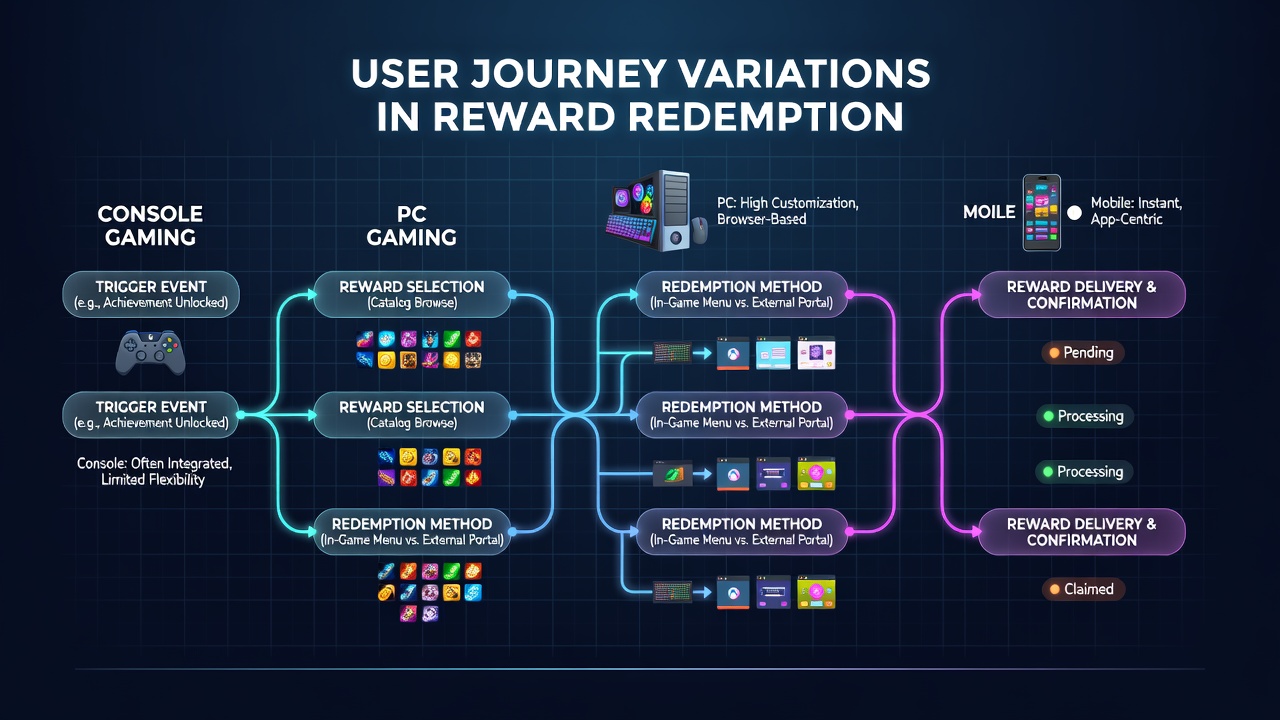
Players encounter distinct pathways when redeeming rewards depending on whether they engage with online slots, live dealer tables, or hybrid mobile applications, and researchers tracking these processes note clear structural differences that shape completion rates and timing. Data collected through platform analytics reveals that slot-based redemptions often follow streamlined digital sequences, whereas table game formats introduce additional verification layers tied to session pacing and dealer interactions.
Core Elements of Reward Redemption Journeys
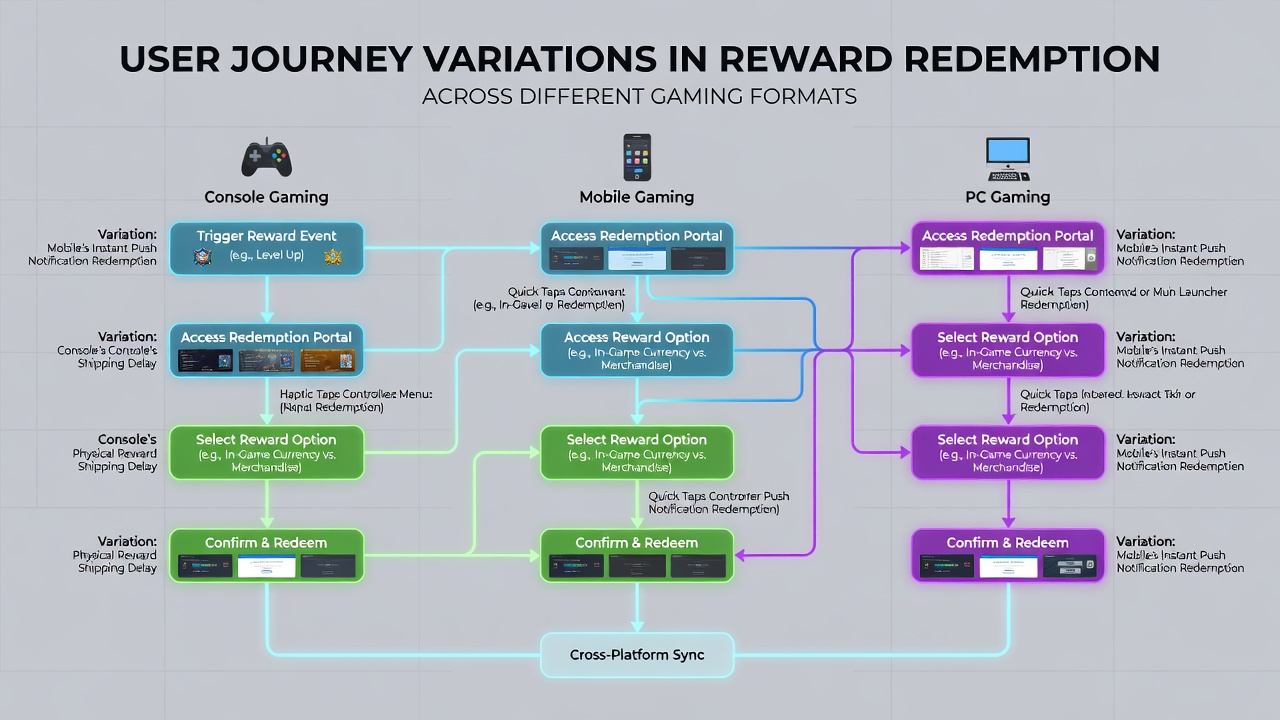
Redemption begins with point accumulation or bonus triggering, yet the subsequent steps diverge sharply across formats because each environment imposes its own interface constraints and regulatory checkpoints. In digital slot environments the journey typically moves from balance display directly to a claim button that initiates automated wallet transfers, while live table sessions require players to request dealer confirmation before any digital credit appears in an associated account. Observers note that these variations emerge from the underlying game architecture rather than from player preference alone.
Online Slot Redemption Patterns
Slot platforms route users through a sequence that starts at the game lobby, proceeds to a dedicated rewards panel, and concludes with instant or near-instant credit application once identity tokens are validated. Studies conducted by platform operators indicate that most redemptions in this format complete within a single screen transition, especially when loyalty tiers have already been pre-verified during login. July 2026 platform reports further show that slot redemptions maintain consistent timing across desktop and mobile browsers because the same backend ledger handles both entry points.
Table Game and Live Dealer Variations
Live dealer environments insert an intermediate step where players must signal intent to the dealer or floor supervisor before the system registers the redemption request, creating a hybrid digital-physical loop. This additional touchpoint extends average processing time compared with fully automated slot flows, according to transaction logs reviewed by compliance teams. The requirement for visible confirmation also introduces session timing variables that do not exist in solitary slot play, since table pace depends on multiple participants.
Mobile Application Differences
Mobile-native apps compress certain verification stages by leveraging device-level biometrics, allowing redemption requests to bypass some browser-based authentication steps that desktop users still encounter. Research from the International Gaming Institute at the University of Nevada, Las Vegas shows that mobile redemptions frequently register higher completion rates in the first thirty seconds after a bonus trigger, largely because push notifications keep the redemption interface immediately accessible. Yet these same apps sometimes route users through extra geolocation checks when cross-border play is involved, adding steps absent from stationary desktop sessions.
Regulatory Influences on Journey Mapping
Regulatory frameworks in multiple jurisdictions shape the number of identity checks required before funds or credits reach player accounts. The New Jersey Division of Gaming Enforcement mandates specific audit trails for every redemption above defined thresholds, which operators implement differently depending on game format. Meanwhile, data released by the Australian Communications and Media Authority highlights that digital table formats in licensed markets incorporate additional responsible-gaming pauses during redemption that slot interfaces often omit. These mandated pauses alter journey length without changing the underlying reward value.
Integration with Loyalty and Tier Systems
Tiered loyalty programs further differentiate redemption paths because higher-status users receive expedited processing in some formats while encountering identical steps in others. Platform telemetry collected through 2026 indicates that elite-tier players in slot environments skip manual review queues that remain mandatory for the same tier in live dealer settings. This inconsistency arises from legacy system design rather than current policy, creating measurable friction points that operators continue to address through interface updates.
Conclusion
Mapping these journey variations demonstrates that reward redemption cannot be treated as a uniform process across gaming formats. Slot environments favor speed through automation, live dealer tables embed human verification steps, and mobile applications balance convenience against location-based compliance requirements. Understanding these structural differences enables clearer analysis of completion metrics and system performance as platforms evolve through July 2026 and beyond.